
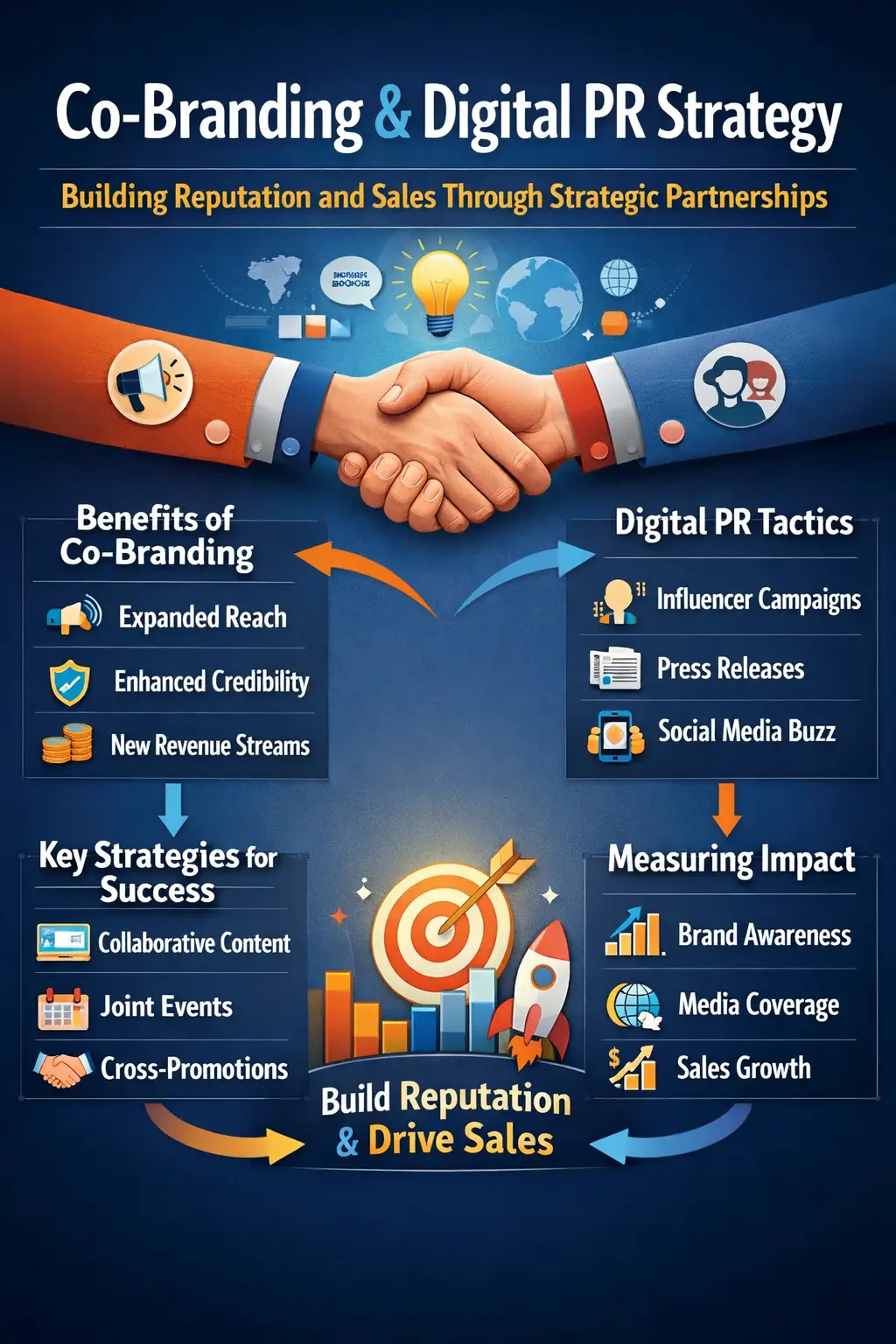
In 2026, reputation is no longer built by advertising alone.
It is built through strategic partnerships, digital authority, and ecosystem positioning.
For Singapore SMEs, co-branding has become one of the most powerful public relations strategies to:
- Enhance credibility
- Expand market reach
- Strengthen stakeholder trust
- Improve digital visibility
- Increase conversion rates
This guide explains how to integrate co-branding, sales strategy, and stakeholder management into a unified digital reputation model.
1️⃣ What Is Co-Branding in Public Relations?
Co-branding is a strategic collaboration between two or more brands to create shared value and shared credibility.
When executed correctly, co-branding:
- Transfers trust
- Improves brand perception
- Strengthens media positioning
- Generates high-quality backlinks
- Boosts conversion confidence
In digital marketing, co-branding becomes a reputation amplifier.
2️⃣ The Digital Reputation Formula
Reputation = Credibility × Visibility × Consistency
If any one of these is weak, brand trust declines.
| Element | Built Through |
|---|---|
| Credibility | Strategic partnerships, certifications, endorsements |
| Visibility | SEO, webinars, social campaigns, PR |
| Consistency | Unified messaging across sales & stakeholders |
3️⃣ Types of Co-Branding That Strengthen Public Relations
🔹 A. Authority-Based Co-Branding
Partner with:
- Industry associations
- Martech providers
- Cybersecurity firms
- Training institutions
Digital Execution:
- Joint webinars
- Whitepapers
- LinkedIn Live sessions
- Co-authored blog articles
Impact:
Builds thought leadership and SEO authority.
🔹 B. Product / Service Collaboration
Example:
Marketing agency + Cybersecurity consultant → “Secure Growth Package”
Impact:
- Increases perceived value
- Reduces buyer risk
- Improves upselling opportunities
🔹 C. Cause-Based Campaigns
Example:
SME + Sustainability NGO
Impact:
- Emotional branding
- Social trust
- Media coverage potential
4️⃣ Integrating PR With Sales Strategy
Many SMEs fail because they separate PR from revenue.
Instead, integrate it into the sales funnel:
Awareness Stage
- Co-branded webinars
- Social media announcements
- PR articles
⬇
Consideration Stage
- Downloadable checklist
- Email nurturing
- Case studies
⬇
Conversion Stage
- Free audit
- Joint consultation package
- Limited-time co-branded offer
PR should always feed the pipeline.
5️⃣ Stakeholder Management Integration
A strong brand manages 3 key stakeholder groups:
Customers
- Testimonials
- Loyalty programs
- User-generated content
Business Partners
- Cross-referral systems
- Joint landing pages
- Shared press releases
Employees
- LinkedIn advocacy
- Employer branding
- Internal alignment communication
Reputation is ecosystem-driven.
6️⃣ Why This Matters for Singapore SMEs
Singapore’s SME market is:
- Highly competitive
- Digitally advanced
- Trust-sensitive
Buyers research before purchase.
Strong co-branding improves:
- SEO authority signals
- Conversion rates
- Partnership opportunities
- Perceived stability
7️⃣ Strategic Takeaway
If you want to enhance brand reputation digitally:
- Choose partners that fill credibility gaps
- Create co-branded authority content
- Integrate PR with sales funnel
- Align messaging across stakeholders
- Measure both visibility and conversion impact
FAQ
What is co-branding in digital marketing?
A strategic collaboration between brands to increase credibility and reach.
How does co-branding improve SEO?
It generates backlinks, brand mentions, and authority signals.
Can SMEs use co-branding for lead generation?
Yes, through webinars, whitepapers, and referral campaigns.
Is co-branding only for large companies?
No. SMEs benefit even more due to borrowed trust effects.
Singapore SME Case Study Example
📌 Case Study: SecureGrowth Solutions (Fictional SME Example)
Industry:
Digital Marketing Agency (10 employees, Singapore)
Challenge:
- Low perceived authority
- Competing with larger agencies
- Limited inbound leads
Strategy Implemented:
Step 1: Co-Branding Partnership
Partnered with local cybersecurity consultancy.
Launched:
“AI Marketing + Data Protection Workshop for SMEs”
Step 2: Digital PR Activation
- Co-authored blog article
- LinkedIn Live session
- Shared mailing lists
- Press mention in SME newsletter
Step 3: Funnel Integration
- Free “Digital Risk Audit” download
- 30-minute joint consultation
- Bundle service discount
Results (6 Months)
- 40% increase in inbound leads
- 22% higher close rate
- 3 new retainer clients
- 15 high-quality backlinks
- Improved Google ranking for “secure digital marketing Singapore”
Key Success Factors
- Clear positioning alignment
- Strong digital amplification
- Integrated sales follow-up
- Mutual audience benefit
Leave a Reply