
The digital marketing world is evolving at breakneck speed — and what worked yesterday might already be outdated today. As platforms shift, privacy laws tighten, and AI floods the market, digital marketers face an urgent challenge: adapt or be left behind.
In this post, we explore the top future challenges facing digital marketing — and more importantly, how you can navigate them successfully.
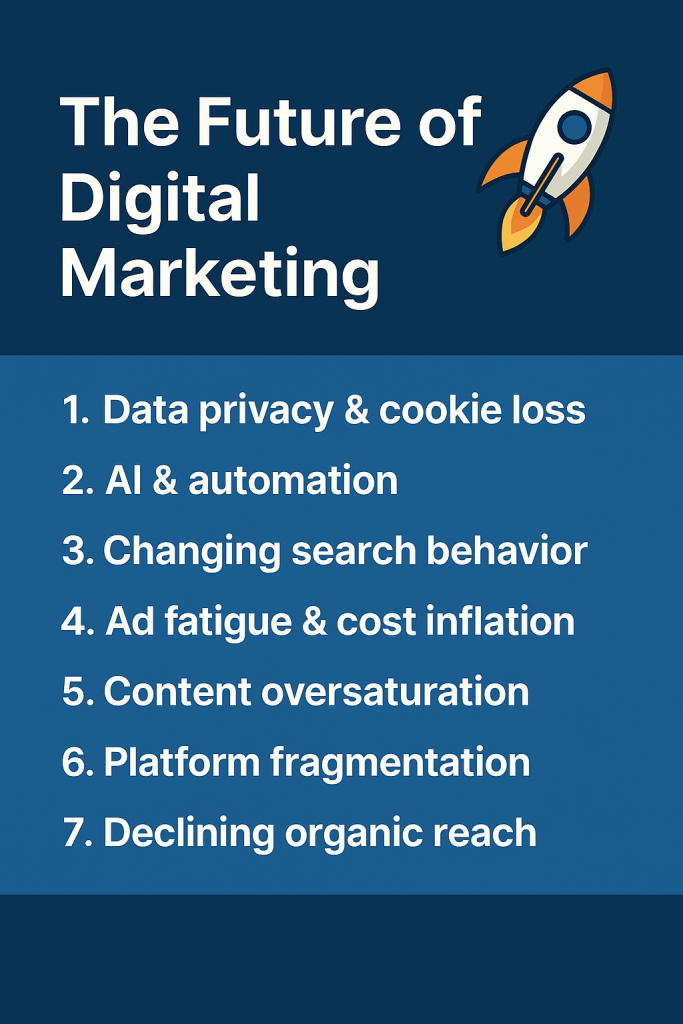
🛡️ 1. The End of Cookies and Rise of Privacy
Third-party cookies are disappearing. Platforms like Google Chrome are phasing them out, and privacy regulations like GDPR, CCPA, and Singapore’s PDPA are tightening.
✅ How to Adapt:
- Build first-party data with email signups and lead magnets.
- Use server-side tracking and tools like Google Tag Manager.
- Shift toward contextual advertising and consent-based remarketing.
🤖 2. AI & Automation Overload
AI tools now write copy, design ads, and even run campaigns — but over-relying on them can create generic and soulless content that turns audiences off.
✅ How to Adapt:
- Use AI to enhance productivity, not replace originality.
- Invest in human-centric storytelling and personalized content.
- Learn prompt engineering to guide AI with precision.
🔍 3. Search Behavior Is Evolving
People no longer rely solely on Google. They search on TikTok, YouTube, and even AI tools like ChatGPT.
✅ How to Adapt:
- Optimize for conversational search queries.
- Add structured data and FAQs for voice and AI results.
- Diversify visibility with content on platforms like Reddit, TikTok, and Pinterest.
📉 4. Ad Fatigue & Rising Costs
With more brands entering the ad space, CPCs and CPMs are rising — and users are tuning out repetitive or intrusive ads.
✅ How to Adapt:
- Use retargeting + lookalike audiences for better efficiency.
- Refresh ad creatives frequently.
- Invest in owned media like your blog, email list, or online community.
📲 5. Content Overload & Attention Scarcity
Everyone is creating content — but users are overwhelmed. It’s harder than ever to stand out in the crowd.
✅ How to Adapt:
- Focus on quality over quantity.
- Create content based on personal experiences, data, or case studies.
- Use micro-formats: Instagram Reels, carousels, YouTube Shorts.
🌐 6. Platform Fragmentation
Your audience is no longer just on Facebook or Google — they’re scattered across 10+ platforms, each with its own content rules.
✅ How to Adapt:
- Choose a primary platform and repurpose content across others.
- Match your platform strategy to your buyer personas.
- Use cross-platform tracking (e.g., GA4, Meta Events, UTM tags).
📉 7. Declining Organic Reach
Organic reach on platforms like Facebook and Instagram is at all-time lows, forcing brands to rely on paid strategies to stay visible.
✅ How to Adapt:
- Focus on SEO, email marketing, and community-led growth.
- Use organic content to warm up audiences, then convert via ads.
- Collaborate with micro-influencers for organic traction.
✅ How Marketers Can Thrive in the Future
| Strategy | What It Looks Like |
|---|---|
| Own your audience | Email list, WhatsApp opt-ins, private communities |
| Balance AI + Authenticity | Let AI scale execution, but keep the brand voice human |
| Think in Funnels, Not Platforms | Guide users from awareness to loyalty across any channel |
| Learn and Relearn | Stay ahead with training in GA4, AI tools, and evolving privacy rules |
| Create for Humans First | Prioritize clarity, empathy, and experience in every message |
💬 Final Thoughts
The future of digital marketing will reward those who stay nimble, intentional, and audience-focused. It’s not about chasing trends — it’s about understanding your customer deeply, using the right tools strategically, and creating real value at every stage.
Marketing isn’t just digital anymore. It’s human, personal, and adaptive.
Leave a Reply