
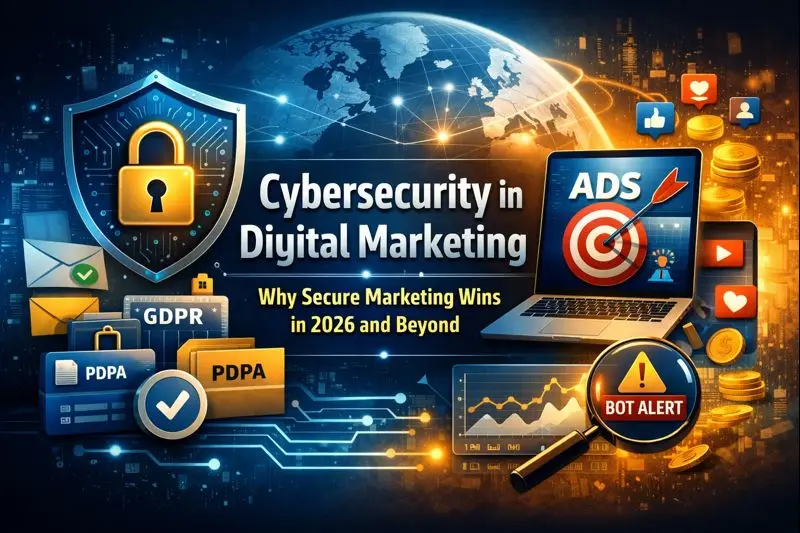
Introduction: Growth Without Security Is a Risk
Digital marketing today runs on data — customer emails, behavioral tracking, CRMs, automation tools, and ad platforms.
But here’s the uncomfortable truth:
The more digital your marketing becomes, the bigger your attack surface gets.
A single insecure form, compromised ad account, or leaked customer list can destroy:
- Brand trust
- Marketing ROI
- Regulatory compliance
- Customer confidence
That’s why cybersecurity is no longer optional in digital marketing — it’s foundational.
2️⃣ Why Cybersecurity Now Matters More Than Ever in Marketing

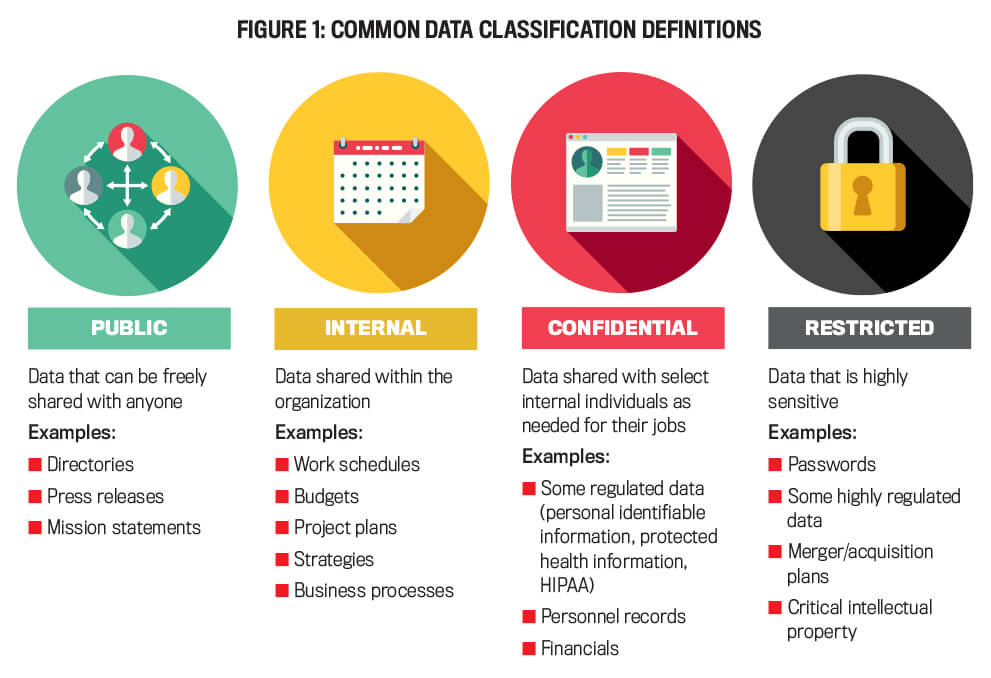
The modern marketing stack is vulnerable by design:
- Landing pages collect personal data
- Analytics track behavior
- Ads connect to payment methods
- CRMs store sensitive customer info
Common real-world risks:
- Fake leads from bots
- Click fraud draining ad budgets
- Hacked social media accounts
- Data breaches triggering PDPA/GDPR fines
👉 Secure marketing isn’t about fear — it’s about protecting growth.
3️⃣ How Cybersecurity Integrates Directly Into Digital Marketing
🔒 Secure Landing Pages & Lead Funnels


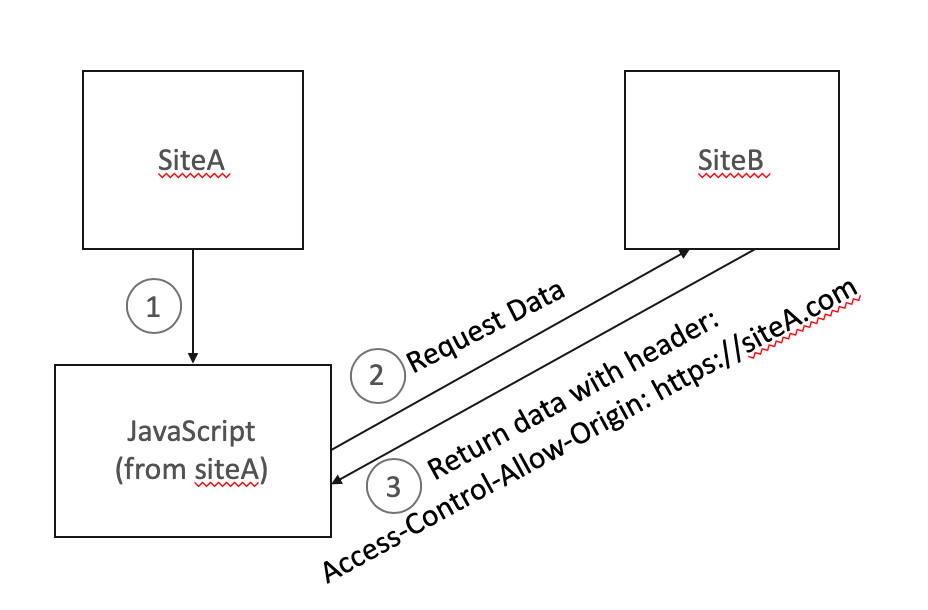
Cybersecurity principles applied:
- HTTPS, SSL, HSTS
- CAPTCHA & bot mitigation
- Secure form handling
- Input validation (prevent XSS / SQL injection)
Marketing payoff:
- Higher conversion trust
- Fewer fake leads
- Better SEO performance
Secure pages don’t just protect — they convert better.
📊 Data Protection, PDPA & Trust Marketing
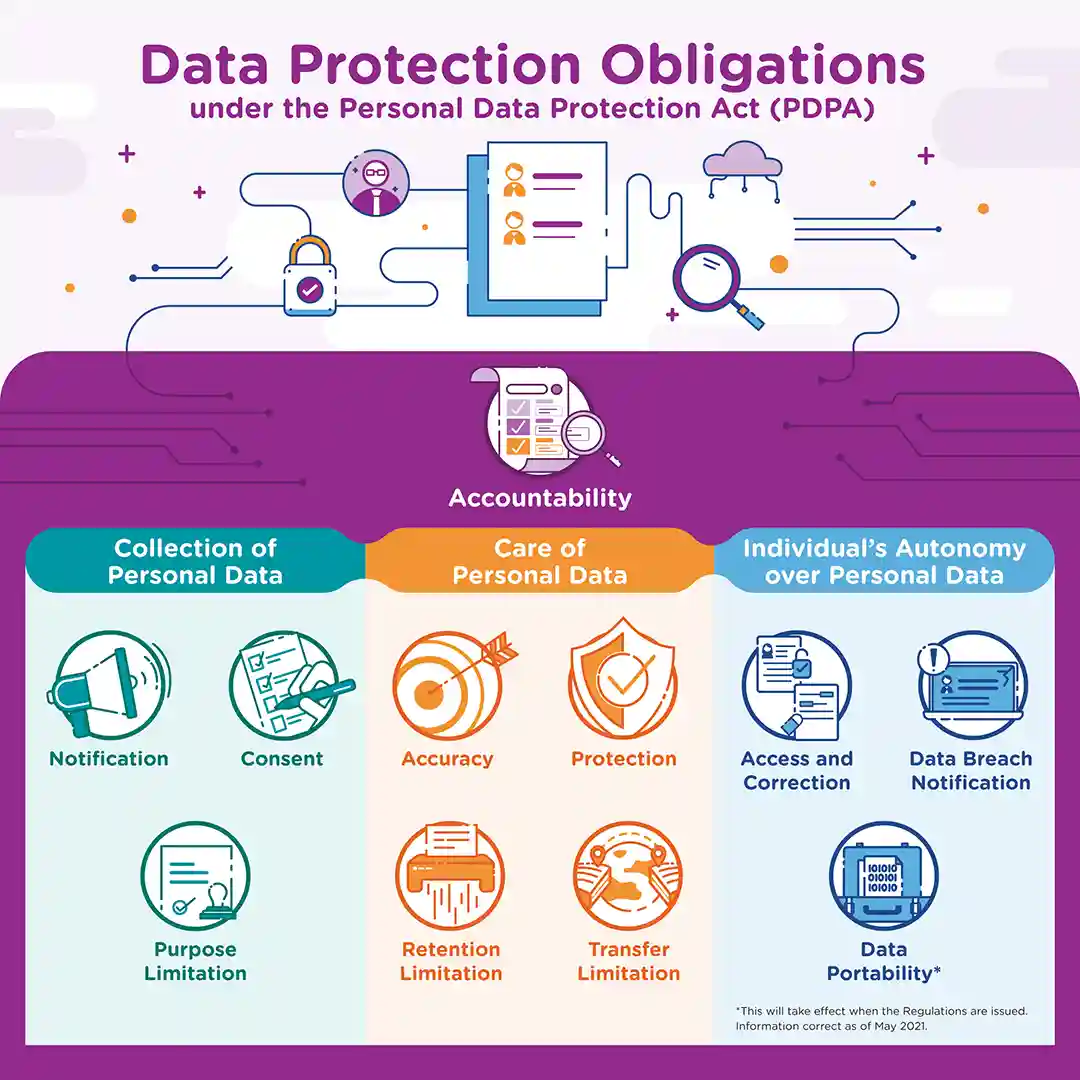

Cybersecurity ensures:
- Proper consent handling
- Data minimization
- Secure CRM access
- Breach response readiness
Why this matters for marketing:
- Customers are more privacy-aware
- Compliance builds brand credibility
- Trust reduces churn
In Singapore, PDPA-compliant marketing is a business advantage, not a checkbox.
🤖 Ad Fraud, Bot Traffic & Fake Analytics
Cybersecurity helps marketers:
- Identify abnormal traffic patterns
- Detect click fraud
- Filter bots from analytics
- Protect ROAS and attribution accuracy
Most marketers suspect fake traffic.
Cyber-trained marketers can prove it and stop it.
🔐 Protecting Marketing Accounts & Platforms
Marketing assets are high-value targets:
- Google Ads
- Meta Business Manager
- Email platforms
- CMS admin panels
Cyber best practices:
- Multi-factor authentication (MFA)
- Role-based access
- Secure API integrations
- Password hygiene
One compromised account can burn months of ad budget overnight.
4️⃣ Cybersecurity as a Competitive Marketing Advantage
Security can be part of your brand story:
- “Privacy-first marketing”
- “Secure-by-design funnels”
- “PDPA-ready campaigns”
This is especially powerful in:
- Healthcare
- Finance
- Education
- B2B SaaS
- Professional services
Trust isn’t claimed — it’s engineered.
5️⃣ How Digital Marketing Skills Strengthen Cybersecurity
This works both ways.
| Digital Marketing Skill | Cybersecurity Advantage |
|---|---|
| Funnel thinking | Attack chain & threat modeling |
| Analytics | SIEM & log analysis |
| Copywriting | Security awareness messaging |
| Campaign planning | Incident communication |
| SEO & content | Cyber brand authority |
Security professionals who can communicate risk in business language are far more valuable.
6️⃣ Emerging Hybrid Roles (2026–2030)
This crossover creates powerful career paths:
- Cybersecurity Marketing Specialist
- Trust & Privacy Consultant
- Secure Growth Strategist
- Cyber Pre-Sales / Solutions Consultant
- Product Marketing for Security Tools
Few professionals can bridge growth + protection — that’s the opportunity.
Conclusion: Security Is No Longer Optional in Marketing
Digital marketing drives visibility, leads, and revenue.
Cybersecurity protects all three.
When growth meets trust, brands scale safely.
If you want marketing that converts and protects your business, secure marketing is the future.
Leave a Reply